
Vinyl siding is designed to shed water, not stop it completely. When it is installed incorrectly or damaged over time, water can slip behind it and soak into the wall system. Many vinyl siding defects that signal hidden water damage are hard to see from the outside. That is why regular inspections matter, especially in coastal areas like Virginia Beach and Chesapeake.
In this guide, we will walk through the most common problems we find during home inspections and how you can spot early warning signs before small issues turn into costly repairs.
Why Vinyl Siding Can Hide Serious Moisture Problems
Vinyl siding is not waterproof. It is a cladding system. Its job is to direct water away from the wall, but it relies on proper flashing, house wrap, and installation to work correctly.
If any part of that system fails, water can get trapped behind the panels.
In Hampton Roads, the moisture risk is even higher because of:
Salt air that corrodes fasteners
Heavy seasonal rain
According to InterNACHI industry standards, water intrusion is one of the most common exterior defects found during inspections. When moisture gets behind siding, it can damage:
OSB or plywood sheathing
Wall framing
Insulation
Interior drywall
The problem is that vinyl siding can flex and move. It may look fine even when the structure behind it is wet.
That is why understanding vinyl siding defects that signal hidden water damage is so important for homeowners and buyers.
What Are the Most Common Vinyl Siding Defects Inspectors Find?
During a home inspection, we often see the same issues come up again and again. These siding products are a popular choice for home exterior applications, but they require proper installation to provide adequate resistance to moisture intrusion.
Loose or Warped Panels
Vinyl siding must be nailed loosely so it can expand and contract. If nails are driven too tightly, the panels cannot move properly. This can cause:
- Buckling
- Warping
- Gaps between panels
In coastal areas like Virginia Beach, strong winds can also pull panels loose. When siding is loose, wind-driven rain can get behind it easily.
Homeowners may notice rattling sounds during storms or visible gaps along seams. Understanding the durability and upkeep requirements of different siding products can help you make informed decisions about maintaining your home exterior.

Missing or Improper Flashing
Flashing is metal siding or vinyl material installed around windows, doors, and roof intersections. Its job is to direct water away from openings and keep the house protected from moisture damage.
If flashing is:
Missing
Installed backwards
Cut too short
Not layered correctly
Water can flow straight into the wall cavity.
This is one of the most common causes of hidden moisture damage. In many cases, the siding itself is fine. The problem is the detail work around it. Proper flashing is a key consideration when comparing vinyl to aluminum siding or other materials.
Improper Clearance at Rooflines and Foundations
Siding should not touch roofing shingles or the soil.
When vinyl siding is installed too close to:
Roof surfaces
Deck boards
Concrete slabs
The ground
It can trap moisture and allow water to wick upward into the wall.
In Chesapeake, where soil moisture levels can stay high, siding that sits too low often creates problems at the bottom of exterior walls. This issue affects various siding styles, from traditional lap board to board and batten designs.
Cracks, Holes, and Impact Damage
Even small cracks can be a big problem.
Hampton Roads sees strong storms and wind-blown debris. A small crack from impact damage may not seem serious, but it creates an opening for water.
Because vinyl siding overlaps, water that enters through one crack can travel behind several panels before it dries.
Over time, this hidden moisture can cause:
Mold growth
Wood rot
Swollen sheathing
The resistance to impact varies among different vinyl siding products and colors available on the market today.
How Can You Tell If Water Is Trapped Behind Vinyl Siding?
You cannot see behind the siding without removing it. But there are warning signs.
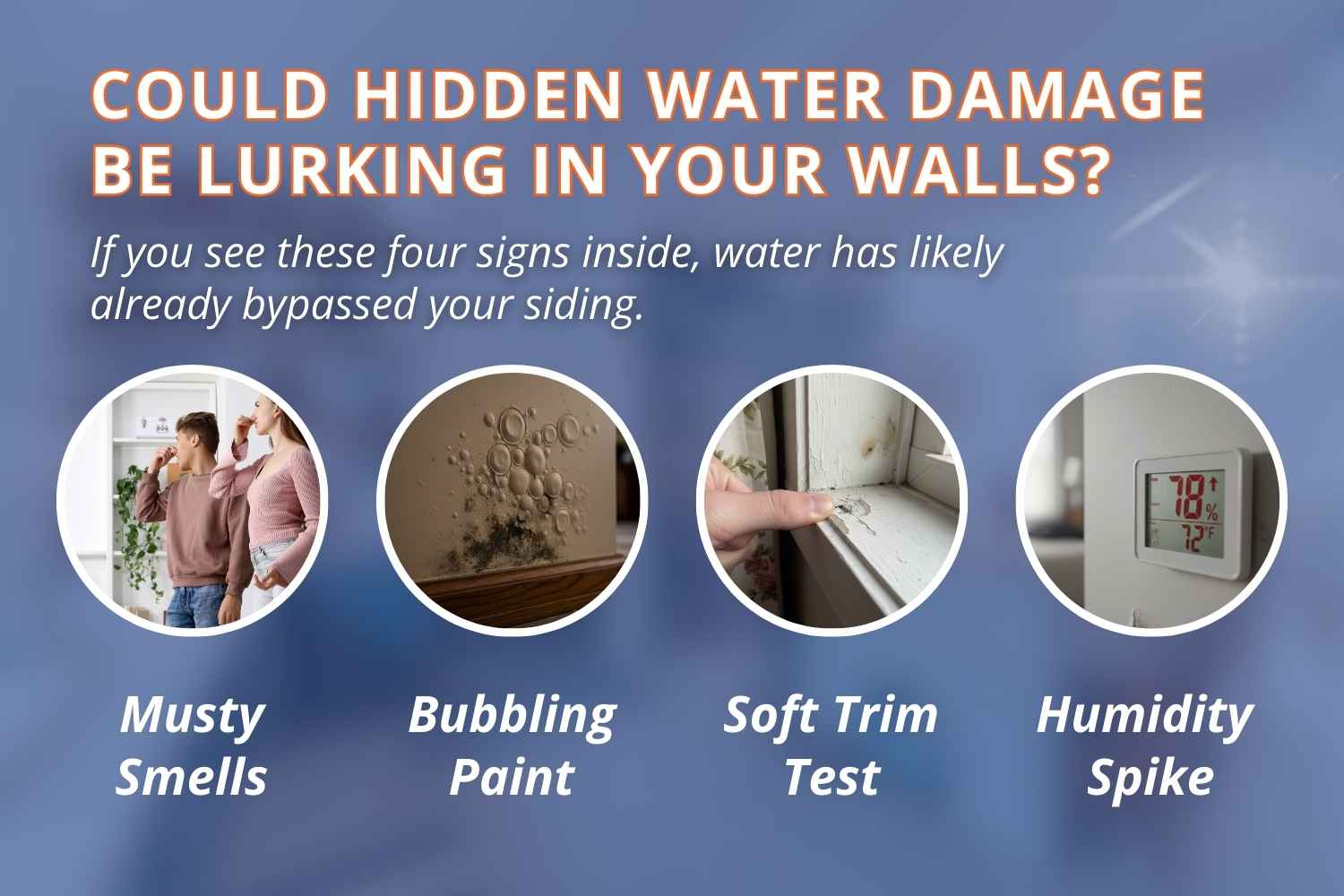
Here are signs that may indicate hidden water damage:
Soft or spongy spots on exterior walls
Bubbling or staining on interior drywall
Peeling paint indoors
Higher indoor humidity near certain rooms
If you press lightly on the trim around windows and it feels soft, that can also signal moisture damage.
Keep in mind that these symptoms often appear after damage has already started. This is one reason homeowners discover the benefits of low maintenance siding products that offer better moisture resistance.
Quick Homeowner Checklist
| Safe to Check | Do Not Do |
|---|---|
| Look for loose or uneven panels | Do not pry panels loose |
| Check for visible cracks or holes | Do not remove siding |
| See if the siding is touching the ground | Do not probe structural areas |
| Confirm flashing is visible above windows and doors | Do not inspect areas beyond your training |
If you notice multiple warning signs, it is wise to schedule a professional home inspection to determine if hidden water damage is present.
Why Coastal Conditions Make Vinyl Siding Issues Worse
Homes in Virginia Beach and Chesapeake face unique challenges. Communities in these neighborhoods realized years ago that proper installation and maintenance are critical when dealing with coastal weather patterns.
Wind-Driven Rain
During coastal storms, rain does not fall straight down. It blows sideways. This pushes water behind small gaps in siding.
Even properly installed siding can be stressed during heavy storms.
High Humidity
Humidity levels in Hampton Roads often stay above 70 percent in summer. When moisture gets behind siding, it dries more slowly.
That extended dampness increases the risk of mold and rot. The process of moisture accumulation can affect various materials differently, with wood siding often requiring more frequent maintenance and paint to provide adequate protection.
Salt Air Corrosion
Salt in the air can corrode metal fasteners over time. If nails or fasteners weaken, panels may loosen and allow more water intrusion.
Small installation mistakes that might not matter in dry climates can become major issues here. This is talking about real performance differences that homeowners need to discover when selecting exterior finishes for coastal homes.
What Does a Home Inspector Look for During a Vinyl Siding Inspection?
A vinyl siding inspection is primarily a careful visual evaluation of the exterior. The goal is to identify defects, installation concerns, and moisture risks without causing damage to the home.
During the inspection, we look for:
Loose, warped, or improperly fastened panels
Nailing patterns that may restrict proper expansion and contraction
Visible flashing at windows, doors, and roof intersections
Proper clearance above roofing materials and soil
Moisture staining on soffits, trim, or nearby surfaces
Deteriorated or missing caulking
We also evaluate how the siding interacts with other exterior systems. For example:
Roof drainage that may direct water toward exterior walls
Gutters that overflow near the siding
Exterior penetrations (vents or utility lines) that are not well sealed
Siding is part of a larger water management system. If one component fails, it can affect the others.
A standard home inspection does not include removing siding. However, visible clues often point to areas where hidden moisture may be present. Identifying those risk factors early helps homeowners and buyers better access the condition of the exterior and decide on the next steps.
A standard home inspection does not include removing siding. However, visible clues often point to areas where hidden moisture may be present. Identifying those risk factors early helps homeowners and buyers better access the condition of the exterior and decide on the next steps. Understanding the range of siding products available, from traditional vinyl and aluminum siding to PVC composites and wood alternatives, can improve your ability to make informed choices.
When Should You Schedule a Professional Inspection?
You do not have to wait for visible damage to take action. In fact, the best time to schedule an inspection is before small issues turn into expensive repairs.
Consider a professional inspection if:
- You are buying a home and want to find out the condition of the exterior
- You notice signs of interior moisture, such as stains, odors, or peeling paint
- Your home has recently gone through a major storm with heavy wind or rain
- Vinyl siding was newly installed, and you want to confirm proper workmanship
- Panels appear loose, warped, or damaged
In coastal areas like Virginia Beach and Chesapeake, wind-driven rain and high humidity can speed up moisture problems. What starts as a small, flashing error or a loose panel can eventually cause damage to the sheathing or framing behind the walls.
Many homeowners wait until damage becomes obvious. By that point, repairs may be required to remove large sections of siding to replace wet insulation or rotted wood.
A professional inspection helps identify risk factors early, giving you clear information about the condition of your siding and helping you make informed decisions about maintenance or repairs. This page provides ways to add confidence in your understanding of what to look for when evaluating your home’s exterior protection.
Related Questions
Does vinyl siding cause mold problems?
Vinyl siding itself does not cause mold. Mold develops when moisture becomes trapped behind the siding and stays damp for long periods. If flashing, clearances, or drainage details fail, water can soak the sheathing or framing.
How long does vinyl siding last in coastal Virginia?
Vinyl siding typically lasts between 20 and 40 years, depending on material quality and installation. In coastal Virginia, strong winds, high humidity, and salt air can shorten the lifespan of the siding if it is not properly maintained. Regular inspections help extend its service life by catching small defects early.
Can damaged vinyl siding be repaired?
In many cases, individual panels can be removed and replaced without replacing the entire wall section. However, if moisture has damaged the sheathing or framing behind the siding, repairs may be required to remove larger sections to address the structural components.
Is vinyl siding checked during a home inspection?
Yes. A standard home inspection includes a visual evaluation of exterior cladding, including vinyl siding. Inspectors look for loose panels, improper installation, flashing issues, clearance problems, and other signs that may indicate moisture risk.
How much does hidden water damage behind siding cost to fix?
Repair costs vary widely based on the severity of the damage. Minor siding repairs may cost a few hundred dollars, while structural repairs involving sheathing, insulation, or framing can reach several thousand dollars. Early detection often reduces repair scope and overall cost.
Conclusion
Vinyl siding defects that signal hidden water damage are often subtle. Loose panels, missing flashing, and improper clearances can allow moisture into the wall system long before visible damage appears.