

A shed that looks like a useful bonus may have visible problems that affect how you use the property or what you want to clarify before buying. An outbuilding and shed inspection Chesapeake buyers can use as part of due diligence documents observed conditions in accessible areas. A leaning wall, damaged roofing, poor drainage, or signs of deterioration can all prompt closer questions.
It’s reasonable to want clarity about both the structure and the rules that apply to it. A buyer’s inspection documents observed property conditions; it doesn’t approve zoning, permits, or code compliance. Those are separate questions for the City of Chesapeake and, where relevant, the property’s association.
This checklist explains what to look for around a shed or outbuilding, what visible issues may indicate, and how to distinguish a condition finding from a municipal review. You’ll also learn how to prepare access, document observations, and use the findings when weighing your next steps. A Premier Home Inspection is veteran-owned and operated, led by Certified Master Inspector Clay Somers, and provides detailed reports to support informed property decisions in Chesapeake and Hampton Roads, including Norfolk, Virginia Beach, Portsmouth, Suffolk, and Hampton.
Key Takeaways
- An outbuilding and shed inspection Chesapeake buyers can use focuses on visible, accessible conditions at the time of inspection, not municipal approval.
- Learn how to observe exterior and interior areas, including roofing, flashing, framing, doors, windows, and signs of water entry.
- Prioritize findings such as active water entry, unstable components, and exposed electrical hazards when weighing potential concerns.
- Use a simple sequence to identify the structure, prepare access, document observations, and review available records.
- Separate shed condition from zoning and permit questions, then use documented inspection findings to inform your property decision.
Outbuilding and Shed Inspection in Chesapeake: Condition Review or Code Approval?
A shed can affect a buying decision beyond its appearance. You may plan to store equipment, use it as a workshop, or simply keep it as part of the property. In each case, its visible condition and limitations matter. The key is understanding what an inspection can tell you and what it can’t.
An outbuilding and shed inspection Chesapeake buyers include in due diligence is a condition review, not municipal approval. A buyer’s inspection documents visible, accessible conditions at the time of inspection. Those observations can help you understand the structure’s apparent condition and identify matters that may warrant further evaluation. They can’t guarantee discovery of every defect, particularly when areas are concealed or inaccessible.
What a shed condition inspection can help you understand
Think of a condition review as a snapshot, not a guarantee about future performance. Observations can help distinguish ordinary wear from visible deterioration or a condition that deserves closer attention. For example, a door that won’t close properly is useful information, but that observation alone may not establish why it sticks or what correction is needed.
Access affects what can be observed. Stored belongings may block walls or framing, and concealed areas aren’t visible simply because they’re inside the shed. Read the report in light of what could be seen safely and without moving stored items or dismantling materials.
Why Chesapeake zoning and inspection are different questions
A condition review describes observable property conditions. The City’s accessory-structure guidance addresses a separate issue: whether a structure’s placement and permitting align with applicable municipal requirements. An outbuilding may also be called an accessory building, but that general term doesn’t determine how Chesapeake treats a specific structure.
Setbacks, easements, property surveys, and building plans can be relevant to placement or permit review. How they apply depends on current City rules and the property’s circumstances. For current requirements, consult guidance from Chesapeake’s Department of Development and Permits. Don’t infer approval from a shed’s age, its appearance in a listing, or a clean condition report.
- Condition review: Documents visible, accessible observations at inspection time.
- Municipal review: Addresses zoning, permit, and code questions under City requirements.
- Buyer’s next step: Use each source for its purpose, and keep the findings distinct.
A private condition report does not certify zoning, permit, or code compliance. Municipal approval, in turn, doesn’t describe the shed’s present physical condition. Keeping these questions separate helps you identify what the inspection reveals, what still needs documentary review, and which information should factor into your purchase decision.
What to Check During a Chesapeake Shed and Outbuilding Inspection
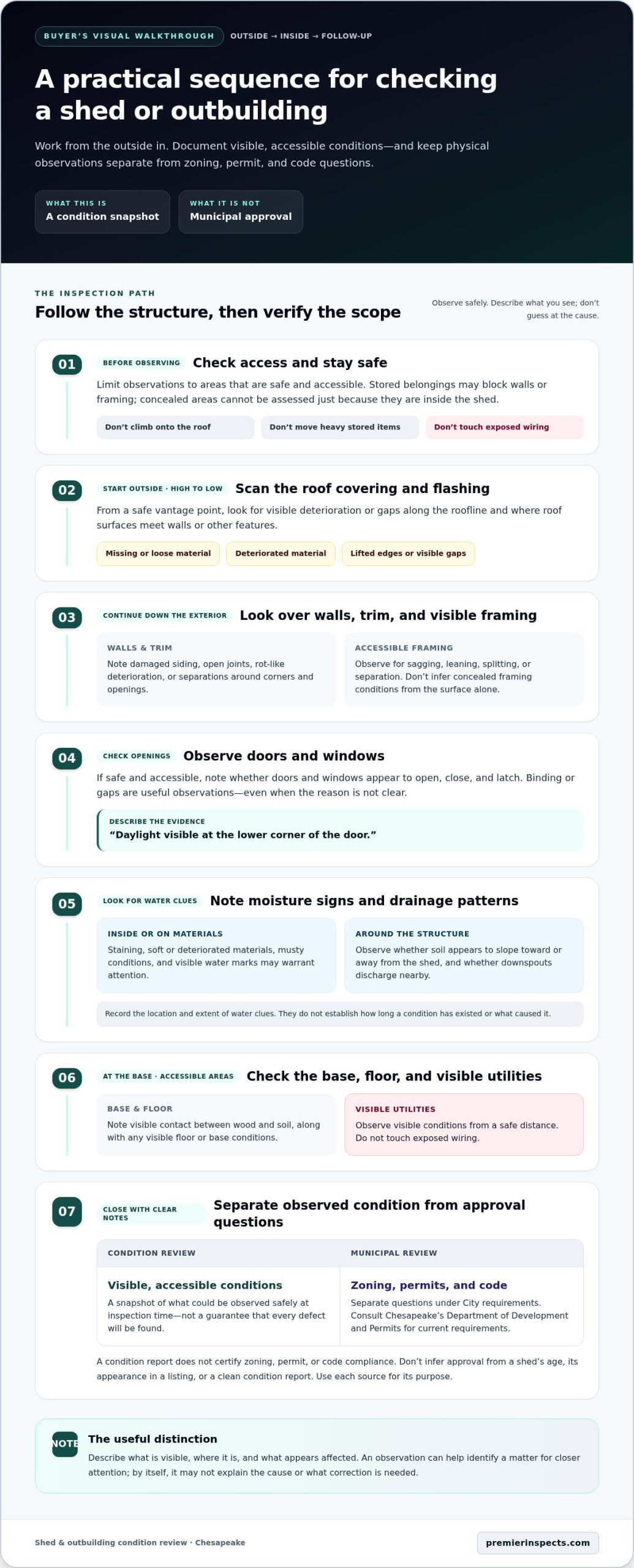
Work from the outside in. This gives you a practical way to organize an outbuilding and shed inspection Chesapeake checklist, spot visible concerns, and record what deserves follow-up. Observe from safe, accessible areas. Don’t climb onto a roof, move heavy stored items, or touch exposed wiring during a visual review.
Roof, walls, doors, and structural components
Start at the roofline and move down the walls. Look for visible deterioration, gaps, and signs that components may have shifted. Record what you see rather than guessing at the cause. A bowed wall is an observation, not proof of why it bowed.
- Roof covering and flashing: Note missing, loose, or deteriorated material, lifted edges, and visible gaps where roof surfaces meet walls or other features.
- Walls and trim: Look for damaged siding, open joints, rot-like deterioration, or separations around corners and openings.
- Framing and connections: From accessible areas, observe visible framing for sagging, leaning, splitting, or separation. Don’t infer the condition of concealed framing from the surface alone.
- Doors and windows: If safe and accessible, note whether they appear to open, close, and latch. Binding or gaps are useful findings to document, even when their cause isn’t clear.
Use specific descriptions in your notes, such as “daylight visible at the lower corner of the door,” rather than a broad conclusion like “poor construction.” Clear observations make the issue easier to understand and help you decide whether further evaluation is appropriate.
Moisture, drainage, floors, and visible utilities
Next, look for clues that water may be reaching or affecting the structure. Staining, soft or deteriorated materials, musty conditions, and visible water marks can warrant attention. These clues don’t establish how long a condition has existed or what caused it. Record their location and extent instead of assuming a diagnosis.
- Ground and drainage: Observe whether the soil appears to slope toward the shed or away from it, and whether downspouts discharge near the structure.
- Base and floor: Note visible contact between wood and soil, apparent deterioration near the bottom edges, uneven or damaged flooring, and supports that look displaced or unstable.
- Interior surfaces: Where access is safe, look for stains, damp-looking areas, damaged finishes, or other signs consistent with water entry.
- Utilities: Record visible wiring, plumbing, or other equipment and any apparent damage or exposed hazards. A visual observation isn’t an electrical or plumbing certification. A concern may call for evaluation by a qualified specialist.
When permitted, photograph or write down notable observations, including where they appear and what was visible nearby. For a broader view of the property during your purchase, you can schedule a buyer’s home inspection and use its documented findings to inform your next steps.
How to Prioritize Shed Inspection Findings Before Buying
A list of observations is most useful when it helps you decide what needs attention first. For an outbuilding and shed inspection Chesapeake buyers use as part of due diligence, prioritize findings by potential safety impact, signs of ongoing damage, and any documentation questions that remain. An observation alone doesn’t establish a hidden cause, repair cost, or code violation.
| Priority | Examples of visible findings | Practical next step |
|---|---|---|
| Safety concern | Exposed wiring, a visibly unstable component, or an unsafe-looking entry area | Limit use of the affected area and arrange appropriate qualified evaluation. |
| Possible active damage | Apparent water entry, fresh-looking dampness, or material that appears to be deteriorating | Document its location and extent; seek further evaluation to understand the condition. |
| Maintenance | Worn finishes, damaged trim, or a door that binds | Record the item for planning and consider whether it affects intended use. |
| Documentation question | Unclear history, visible alterations, or uncertainty about permits or placement | Review available records and direct zoning or permit questions to the City. |
Which visible findings deserve prompt follow-up?
Give focused attention to observations that could affect safe use or suggest ongoing damage. A leaning post may be visible, but its cause and stability require further evaluation. A water mark shows staining, but doesn’t prove whether moisture is still entering. Exposed wiring is a safety concern, not an electrical diagnosis. Avoid using or touching an area that appears hazardous, and seek an appropriately qualified specialist assessment where needed.
Prioritize the symptom, not an assumed explanation. Notes such as “water staining below the rear roof edge” are more useful than “roof leak,” unless the source has been established. This keeps the report grounded in what was observed while making clear which findings may deserve follow-up.
How to use inspection notes in a property decision
Useful notes connect three points: where the condition is, what was visible, and why it may matter to your intended use. For example, describe the affected wall and visible staining, then note that you want to understand whether the shed can serve your planned purpose. Photographs, when available, can make locations and details easier to discuss during due diligence.
Separate routine upkeep from issues that could affect safety, continued use, or your purchase decision. A worn finish may belong on a maintenance list; apparent water entry or instability may call for more immediate clarification. Don’t assign a repair estimate or declare a code violation based on an observation alone. Review documentation questions separately from physical findings, and use the written report to guide focused follow-up. This clear record helps you weigh what you know, what remains uncertain, and how each finding fits your decision.
A Practical Chesapeake Shed Inspection Checklist for Buyers
A little preparation can make a shed walkthrough more useful. Identify which structure you mean, make safe access possible, and gather what you know before the inspection. This gives you a clear path from initial observations to documented findings, without relying on memory or assuming every area will be accessible.
Before the inspection: access and useful background
Clear a safe path to the doors, visible walls, and accessible interior areas. Belongings stacked against a wall, locked doors, or other obstructions can limit what’s visible. Don’t move heavy items or enter an area that appears hazardous. The home inspection preparation guidance can help you plan access and get ready for the visit.
Collect records you already have, such as permits, plans, receipts, or maintenance documents. They can provide helpful background, but their presence alone doesn’t prove that work was approved or that the structure complies with current requirements. Note the shed’s known use and any visible utilities, then write down questions about its age, alterations, past water entry, or electrical concerns.
During and after the walkthrough: record and review
Follow the inspector’s access and safety instructions. If an area is locked, blocked, or visibly unsafe, don’t force entry. Note the limitation so you understand what wasn’t observable. A clear record of both findings and access limits is more useful than assuming an unseen area is in good condition.
Use this sequence to keep the process organized:
- Identify: Specify which outbuilding you’re discussing and how it’s used or intended to be used.
- Prepare: Provide safe access to areas that can be viewed without moving heavy belongings or taking risks.
- Observe: Follow the walkthrough and note visible conditions, utilities, and areas that couldn’t be accessed.
- Document: Record each observation by component and location. For example, note “staining on the interior wall beside the door,” rather than relying on a general impression.
- Review: Compare report observations with available records, then separate physical-condition questions from zoning or permit questions.
Afterward, use the written findings to identify what’s clear and what needs clarification. If zoning, placement, permits, or other municipal requirements remain a concern, compare those questions with current City of Chesapeake guidance. A condition report documents property observations; it doesn’t establish municipal approval. Keep questions about the shed’s history and paperwork distinct from concerns about its visible condition.
For a buyer’s decision, an organized record can help you discuss the property with a clearer understanding of what was observed and what remains unknown. A Premier Home Inspection, led by Certified Master Inspector Clay Somers, provides detailed reports to support informed property decisions.
Book a Chesapeake Buyer’s Inspection and Make Your Next Decision with Clarity
A shed’s visible condition and its zoning status are separate parts of property due diligence. A buyer’s inspection can clarify observed conditions, while City of Chesapeake guidance addresses municipal placement, permit, and code questions. Neither should be mistaken for the other. Keeping those questions distinct helps you understand what the inspection can inform and what requires separate documentation or review.
What a buyer gains from clear inspection documentation
A well-organized report turns observations into usable information. It can identify where a concern was seen, describe the visible condition, and note limitations that affected access. Photographs, when included, may help you connect a written observation to a specific location. Together, these details can support follow-up conversations and help you weigh the shed’s condition against your plans for the property.
What can the report establish? The observations made during the inspection, within the agreed scope and accessible areas. It doesn’t promise to reveal concealed conditions, diagnose every cause, estimate repair costs, perform repairs, or certify municipal compliance. Use the report as a documented snapshot, and consider additional evaluation when a finding calls for more specialized assessment.
Take the next step with A Premier Home Inspection
A Premier Home Inspection serves Chesapeake and the wider Hampton Roads area, including Norfolk, Virginia Beach, Portsmouth, Suffolk, and Hampton. Veteran-owned and operated, the business is led by Clay Somers, a Certified Master Inspector, and provides detailed reports to support informed property decisions. A buyer’s inspection gives you a documented basis for reviewing observed conditions while keeping the inspection’s role separate from City zoning or permit approval.
Before you decide, use the report to organize your questions: Which conditions were observed? Were any areas inaccessible? What findings may affect how you intend to use the shed? If municipal questions remain, review current City guidance and relevant property records alongside the inspection findings. This practical separation helps turn uncertainty into a more informed next step.
If you’re preparing to buy in Chesapeake, a buyer’s inspection can document observations about the property within its agreed scope. An outbuilding and shed inspection Chesapeake buyers use as part of that process can support a clearer decision without substituting for municipal review.
Move Forward With a Clearer Property Decision
Before you commit, decide how the outbuilding fits your plans for the property. Will its current condition affect how you expect to use the space, or raise questions you want resolved during due diligence? An outbuilding and shed inspection Chesapeake buyers can use helps bring documented observations into that decision, while zoning and permit questions remain separate matters for current City guidance.
A Premier Home Inspection is a veteran-owned Hampton Roads business led by Clay Somers, a Certified Master Inspector. Its detailed reports support informed property decisions by giving you a documented basis for considering observed conditions and deciding what questions to address next. The goal isn’t to replace your judgment, but to help you move forward with clearer information.
For buyers in Chesapeake, Norfolk, Virginia Beach, Portsmouth, Suffolk, and Hampton, a buyer’s inspection can help put property observations in context. Book an inspection with A Premier Home Inspection to get detailed findings for your property decision.
With the right information in hand, you can approach your next decision with greater confidence.
Frequently Asked Questions
Does a home inspection include a detached shed or outbuilding?
A detached shed is addressed as described in the inspection agreement and within the accessible areas observed. Don’t assume every separate structure is automatically covered as part of a home inspection. Identify the shed and its intended use before the appointment so the inspection scope is clear. The resulting report documents applicable observations; it shouldn’t be treated as a guarantee that every part or concealed condition has been evaluated.
Is a shed inspection the same as a Chesapeake building or zoning inspection?
No. A private property inspection documents condition observations, while the City of Chesapeake handles municipal zoning, permit, and building-code determinations. For example, a report may describe a shed’s visible placement or condition, but that observation doesn’t establish whether the location meets current setback rules. Keep the two processes distinct: use inspection findings to understand property condition, and consult current City guidance for official requirements or approval.
Can an inspector evaluate a shed with belongings stored inside?
Accessible areas may still be observed, but stored belongings can block views of walls, floors, framing, or equipment. If boxes cover the floor near a corner, for example, the surface underneath can’t be evaluated visually without access. The inspection doesn’t involve moving heavy or personal items. Make important areas accessible where practical, and understand that obstructed or locked spaces may be documented as limitations.
What happens if an inspection finds water damage in a shed?
The report can describe visible evidence, such as staining, deteriorated material, or damp-looking areas, and identify where it was observed. That finding doesn’t necessarily reveal whether water is still entering or what caused the damage. Use the documented observation to decide whether further evaluation is needed and consider how the condition affects your intended use. A property inspection documents findings; it doesn’t perform repairs or remediation.
Can a home inspection confirm that a Chesapeake shed was permitted?
No. A home inspection isn’t a permit search or municipal approval. An inspector may document visible conditions, but that can’t establish whether permits were issued, required inspections were completed, or the structure meets current City requirements. For a shed in Chesapeake, review available property records and consult the City’s current accessory-structure guidance for permit questions. Keep those records separate from the physical-condition findings in the inspection report.
Should I have a shed inspected before buying a home?
Consider it if the shed affects your plans, such as storing equipment, using a work area, or relying on the structure for everyday storage. Documented condition observations can help you understand visible issues before deciding how much they matter to your purchase. Buyers comparing properties in Chesapeake and Hampton Roads, including Norfolk, Virginia Beach, Portsmouth, Suffolk, and Hampton, can use inspection information alongside their intended use, available records, and separate municipal questions to make a more informed decision.
How should I prepare a shed for a buyer’s inspection?
Provide safe access to the entrance and areas you want observed, and unlock the shed if access is permitted. Move small items away from key surfaces when practical, but don’t shift heavy belongings or enter areas that appear unsafe. Share useful background, such as known alterations or past water issues, and gather records you have. Clear access helps make observations more useful, though concealed or obstructed areas may remain unevaluated.