
Would you willingly sign a contract for a $29,136 surprise expense the day after you move into your new home? With asphalt shingle replacement costs hitting those levels in 2026, the roof over your head is either your greatest asset or your biggest financial liability. It’s natural to feel anxious when you’re staring up at shingles you don’t quite understand, fearing that a hidden leak is already inviting mold into the attic. That’s why having a definitive roof inspection checklist for home buyers isn’t just a good idea; it’s your primary shield against a bad investment.
We’ve seen too many buyers lose their peace of mind to avoidable “surprises” that a vigilant eye could have caught during the first walkthrough. This guide transforms that uncertainty into professional certainty by teaching you exactly what to look for, from granular loss to the latest 2026 building code requirements. You’ll learn which red flags are deal-breakers, how recent 5% to 8% material price hikes impact your negotiation power, and exactly when a professional inspection becomes non-negotiable. We’ll give you the tools to spot the difference between a minor cosmetic issue and a structural failure. Let’s ensure your new home provides the security you’re paying for.
Key Takeaways
- Identify critical exterior warning signs like shingle granule loss and elevation issues by performing a strategic 360-degree walk-around.
- Navigate the attic to find the “true” story of a roof’s health, looking for daylight gaps and hidden moisture that exterior views might miss.
- Utilize this roof inspection checklist for home buyers to spot high-cost liabilities early, giving you the power to negotiate repairs or price credits.
- Understand the vital distinction between your initial visual screening and the definitive diagnostic certainty provided by a Certified Master Inspector.
Why a Roof Inspection Checklist is a Home Buyer’s Best Defense
Why leave your largest financial commitment to chance? In the competitive 2026 real estate market, a roof is more than just shelter; it’s a complex structural system that can cost tens of thousands to rectify if neglected. Utilizing a roof inspection checklist for home buyers during your initial walkthrough provides the leverage you need before the contingency period expires. This period is your only window to negotiate repairs or secure price credits. Once you close, those “hidden” leaks become your private financial burden.
A professional Buyer’s Home Inspection serves as a non-invasive visual and technical assessment of the roof’s integrity. It’s a critical component of a comprehensive overview of the home inspection process, designed to uncover defects that the untrained eye misses. Standard home insurance policies in 2026 often exclude coverage for pre-existing damage or aged systems. If you buy a house with a compromised roof, you might find yourself uninsurable or facing astronomical premiums from day one.
The Financial Stakes of a Failing Roof
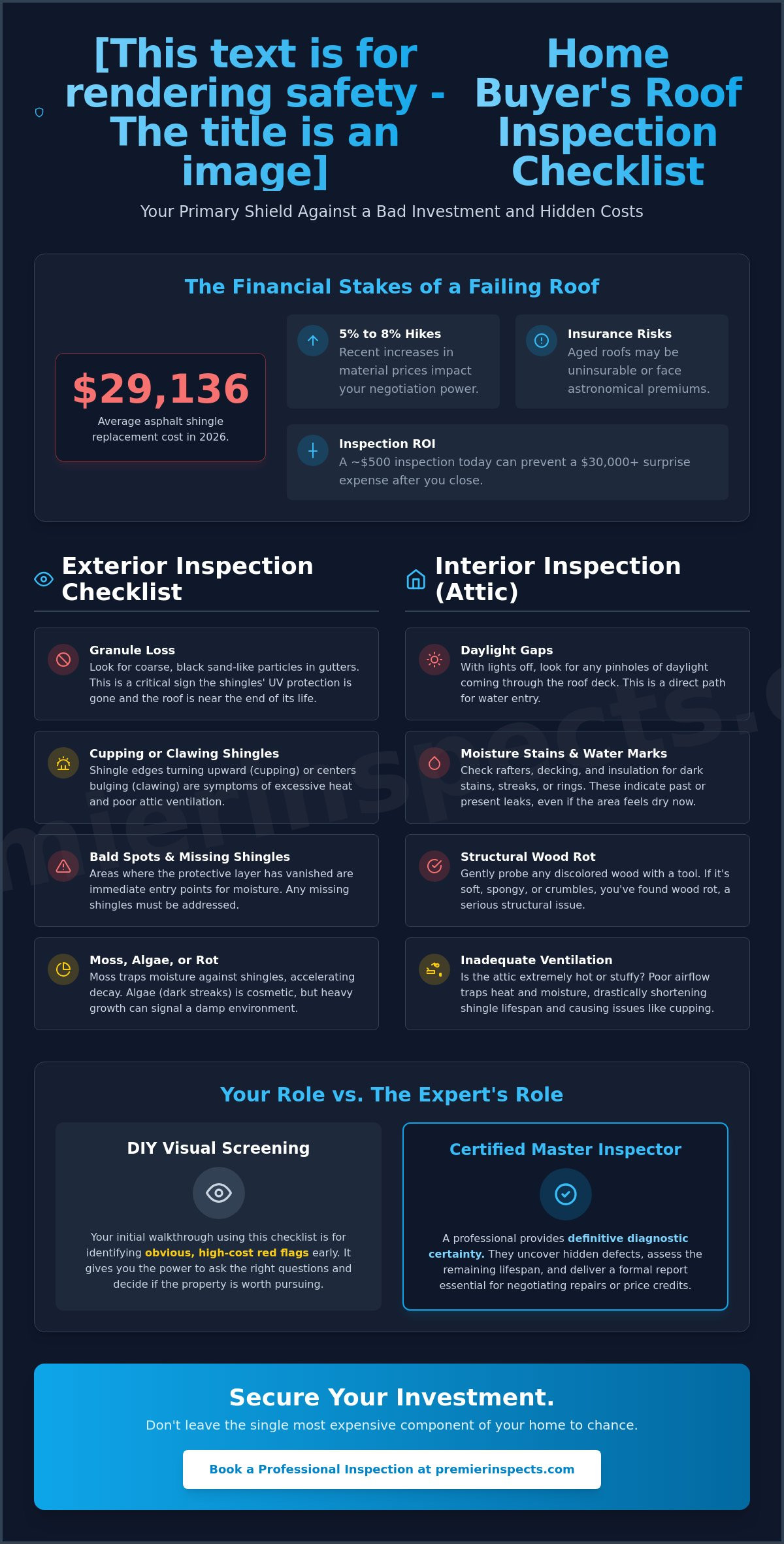
The average cost of an asphalt shingle roof replacement in 2026 has reached $29,136, according to recent industry data. When you consider that a professional inspection costs only a fraction of that amount, the math is simple. A $500 investment today can prevent a $30,000 surprise next month. Beyond the replacement cost, the age and condition of the roof directly impact mortgage approvals. Lenders are increasingly hesitant to fund properties where the roof is nearing the end of its life expectancy, as it represents a significant risk to their collateral.
Hampton Roads Climate Challenges
Our local environment is notoriously tough on roofing materials. In Chesapeake and Norfolk, the persistent high humidity creates a perfect breeding ground for algae and moss. These organisms don’t just look bad; they trap moisture against the shingles and accelerate rot. If you’re looking at homes in Virginia Beach, coastal winds are a primary concern. These gusts can lift shingles and compromise the flashing, leading to leaks that only appear during heavy storms. In the Tidewater region, salt air corrosion is a silent killer for metal components. Roof vents, valleys, and chimney caps can rust through prematurely, creating entry points for water that standard inspections often overlook. We provide the professional certainty you need to ensure these regional threats haven’t already compromised your potential new home.
The Exterior Roof Inspection Checklist: What to Spot from the Ground
Start your assessment before you ever set foot on a ladder. A thorough 360-degree perimeter sweep is the first phase of any effective roof inspection checklist for home buyers. Don’t rely on your naked eye from the sidewalk. Bring a pair of high-powered binoculars to scan the upper elevations and north-facing slopes where damage often hides. You’re looking for more than just aesthetics; you’re looking for the structural narrative of the home. If the shingles look uneven or “patchy” from a distance, the roof is already telling you a story of neglect.
Focus your attention on the gutters first. If you see an accumulation of what looks like coarse black sand, you’ve found “granule loss.” These granules are the shingle’s primary defense against UV degradation. When they wash away, the asphalt underneath bakes and becomes brittle. It’s a clear signal that the roof is nearing the end of its functional life. While you’re there, look for “cupping” or “clawing.” Cupping occurs when the edges of the shingles turn upward, while clawing happens when the centers start to bulge. Both are symptoms of excessive heat and poor attic ventilation, which are common issues in our humid climate.
Shingle and Surface Integrity
Scan for “bald spots” where the protective layer has completely vanished. These are immediate entry points for moisture. It’s also vital to distinguish between aesthetic moss and structural wood rot. While moss is a nuisance, it often traps moisture that softens the decking underneath. Don’t ignore “hail bruising” either. These small, dark indentations might look insignificant, but they represent a fracture in the shingle’s internal matting. For a deeper dive into these technical nuances, consult The Homebuyers’ Guide to Roofs from the American Society of Home Inspectors. It provides the context needed to understand why these visual cues matter.
Flashing, Gutters, and Drainage
Water is a roof’s primary enemy, and flashing is the first line of defense. Check the metal strips around chimneys and vent pipes for rust, gaps, or dried-out sealant. Sagging gutters or dark water stains on the fascia boards suggest that the drainage system is failing. One of the most overlooked items is the “kick-out flashing.” This small piece of metal directs water away from where the roof edge meets a vertical wall. If it’s missing, water will inevitably seep behind the siding, causing rot that remains hidden until it becomes a massive liability. If these signs have you worried, it’s time to book a professional diagnostic assessment to confirm the roof’s true condition before you sign.
The Interior Checklist: Finding Roof Leaks in the Attic
The attic is the ultimate truth-teller. While a fresh layer of shingles can mask deep-seated issues on the outside, the interior sheathing provides an unfiltered history of every storm the house has endured. This makes the attic the most critical stop on any roof inspection checklist for home buyers. Grab a powerful flashlight and look up. Do you see points of “daylight” peeking through the roof boards? If light can get in, water is already ahead of it. These structural gaps are immediate deal-breakers that require professional intervention before you commit to the purchase.
Beyond looking for light, you must search for “tide marks” or dark, circular staining on the rafters and plywood. These aren’t just old shadows; they’re the fingerprints of active or past leaks. If the insulation looks flat, discolored, or compressed in specific areas, it’s a sign that water has been soaking the material, stripping it of its R-value and potentially rotting the ceiling joists below. A Buyer’s Home Inspection provides the technical depth to investigate these signs further, but these visual cues are your first line of defense during an initial walkthrough.
Detecting Moisture and Mold
Active moisture often feels “tacky” or damp to the touch, whereas old leaks are usually bone-dry and brittle. Don’t underestimate your sense of smell. A heavy, musty odor is a definitive indicator of hidden mold growth tucked away in the insulation. You might also notice black stains spreading across the plywood sheathing. While this looks like a leak, it’s often a symptom of poor ventilation that allows humid air to condense and “bake” the wood. This chronic moisture leads to delamination, which can compromise the entire roof deck over time.
Structural Concerns and Ventilation
Is the roof deck sagging between the rafters? This “wavy” appearance suggests the plywood has lost its structural integrity due to long-term moisture exposure or undersized sheathing. Check where the bathroom fans lead. If they vent directly into the attic space rather than to the exterior, they’re pumping gallons of moist air into your roof system every day. In the brutal heat of Virginia summers, clear soffit vents are essential. Without them, your attic becomes an oven, cooking shingles from the inside out and drastically shortening their lifespan. We ensure these ventilation paths are clear, providing the professional certainty you need to avoid a costly “attic bake” scenario.
DIY vs. Professional Inspection: When to Call a Certified Master Inspector
Think of your initial walkthrough as a screening tool. It’s the first line of defense in your roof inspection checklist for home buyers, designed to catch the obvious red flags before you waste time on a property that’s fundamentally flawed. However, a screening isn’t a diagnosis. While you can spot missing shingles or sagging gutters with binoculars, a Certified Master Inspector (CMI) like Clay Somers utilizes decades of technical expertise across the Hampton Roads region to see what the untrained eye simply cannot. We don’t just look at the roof; we analyze the entire building envelope to understand how the system is performing under pressure.
Professional inspectors bring high-tech solutions to the table that go far beyond a ladder and a flashlight. For steep elevations or fragile materials, we utilize drones and high-resolution cameras to capture detailed imagery of every ridge and valley. This level of scrutiny is essential for identifying micro-fractures in shingles or subtle flashing gaps that a ground-level view would miss. Most importantly, we utilize thermal imaging to uncover moisture trapped behind walls or under roof decking that remains completely invisible to the naked eye.
The Power of Thermal Imaging
Infrared cameras are the ultimate tool for professional certainty. By detecting minute temperature differences, these cameras reveal “cold spots” in the ceiling where water is accumulating but hasn’t yet started to drip. This technology is particularly critical for flat roofs and complex modern designs where traditional drainage paths are often obscured. It allows us to find a leak before it becomes a mold colony. Why guess about the health of your investment when you can see the thermal reality of the structure? We transform that guesswork into actionable data.
Interpreting the Inspection Report
The value of an inspection lies in the clarity of the final report. You need to distinguish between “maintenance items,” such as minor moss growth, and “major defects” like structural deck failure. This document is your primary leverage tool during the “Home Inspection Contingency” phase of your contract. It provides the objective data needed to demand repairs or negotiate a significant price drop. To maximize the value of our visit, we recommend preparing for your inspection by ensuring all attic access points are clear. Ready for a definitive verdict on your potential home? Schedule your professional diagnostic inspection today to protect your financial future.
Secure Your Investment with A Premier Home Inspection
You’ve utilized the roof inspection checklist for home buyers to screen your potential property and identify the obvious red flags. Now, you need the definitive verdict that only a technical authority can provide. A Premier Home Inspection delivers the “Professional Certainty” that transforms a stressful transaction into a secure investment. Why settle for a cursory glance from a generalist? We operate as your protective advocate, ensuring that every ridge, valley, and vent is scrutinized with the precision your investment deserves. When we step onto a property, we aren’t just looking for leaks; we’re looking for the structural integrity of your future.
Our veteran-owned integrity means we don’t sugarcoat the facts. You’ll receive a no-nonsense, thorough assessment that prioritizes your financial well-being and physical safety. We go beyond the roofline to provide a complete picture of the property’s health. For example, every inspection includes a free RecallCHEK to verify that your home’s major appliances are as safe as the structure itself. Whether you’re buying in the heart of Norfolk or the coastal reaches of Virginia Beach, we provide the essential shield you need against hidden liabilities. We serve the entire Tidewater region with a commitment to local excellence that our competitors simply cannot match.
Why Experience Matters in Hampton Roads
Clay Somers holds the elite status of Certified Master Inspector (CMI), a designation that signifies superior oversight and thousands of successfully completed inspections. In our region, local knowledge isn’t just a bonus; it’s a requirement. We understand how the unique coastal weather patterns of Chesapeake and the specific building codes of our coastal municipalities impact a roof’s longevity. A simple roof inspection checklist for home buyers is a great start, but it can’t replace the seasoned eye of a CMI. You can learn more about our specialized Virginia Beach home inspection services to see how we tackle these regional challenges with technical rigor.
Ready to Move Toward Professional Certainty?
In a fast-paced real estate market, delays can cost you the perfect property. We’ve streamlined our scheduling process to ensure you get the answers you need exactly when you need them. Once the physical assessment is complete, we deliver comprehensive, high-resolution digital reports within 24 hours. These reports provide the objective evidence required to navigate price negotiations or repair requests with absolute confidence. Don’t let a failing roof compromise your financial future. Are you ready to replace anxiety with expert data? Schedule your Buyer’s Home Inspection today and move forward with professional certainty.
Take Control of Your Home Purchase Today
A house is the most significant investment you’ll ever make. Don’t let a failing roof turn your dream into a financial nightmare. By mastering the roof inspection checklist for home buyers, you’ve already taken the first step toward protecting your interests. You now know how to spot the “tide marks” in an attic and recognize why granule loss in the gutters is a sign of a system nearing its end. But remember, a visual walkthrough is just the beginning of the diagnostic process.
To move from simple suspicion to professional certainty, you need a partner with the technical rigor to back you up. A Premier Home Inspection offers the elite oversight of Certified Master Inspector (CMI) leadership and the unwavering integrity of a veteran-owned business. We include a free RecallCHEK with every assessment to ensure your entire home is as secure as the roof over your head. Are you ready to negotiate from a position of absolute strength? Book Your Master-Level Home Inspection Now and secure the peace of mind you deserve. Your new home should be a sanctuary, not a source of stress. We’re here to make sure it stays that way.
Frequently Asked Questions
How long does a typical roof last in Virginia?
Asphalt shingle roofs in the Hampton Roads region typically last between 15 and 25 years. However, our local climate can be unforgiving. High humidity, salt air in Virginia Beach, and intense coastal winds often accelerate wear, making regular assessments vital for any home over 15 years old.
Can I do my own roof inspection before making an offer?
You can certainly perform a visual screening from the ground to spot obvious red flags. Utilizing a roof inspection checklist for home buyers during your initial walkthrough helps you identify missing shingles or sagging gutters early. While this is a great screening tool, it doesn’t replace the technical diagnosis of a certified professional who can access the roof or use advanced imaging.
What are the most common roof deal-breakers in a home inspection?
Major structural sagging, active leaks that have already caused mold growth, and multiple layers of shingles are primary deal-breakers. These issues often indicate long-term neglect and can lead to massive replacement costs. If an inspection reveals these defects, it’s a clear signal to either walk away or negotiate a significant price credit.
Does a new roof mean I don’t need a professional inspection?
A new roof is only as good as its installation. We frequently find improper flashing, blocked ventilation, or poor shingle alignment on relatively new systems. Even if the shingles are fresh, a professional inspection ensures the entire system was installed to modern 2026 standards and won’t fail prematurely.
How much does a professional roof inspection cost for a buyer?
Costs for a professional assessment vary based on the square footage of the home and the technology required, such as drone surveys or thermal imaging. While prices differ across the Tidewater region, the investment is a small fraction of the cost of a full replacement. It provides the professional certainty needed to protect your much larger down payment.
What is the difference between a roof certification and a roof inspection?
A roof inspection is a comprehensive diagnostic of the roof’s current health and defects. A roof certification is a separate document, often required by lenders or insurers, that estimates the remaining life of the roof. Both are valuable, but the inspection is what gives you the detailed roof inspection checklist for home buyers results you need for negotiation.
Will my insurance company require a roof inspection?
In 2026, many insurance carriers require an inspection for any roof that is more than 15 years old. Insurers are increasingly strict about pre-existing damage and aged systems. Failing to provide a clean bill of health could result in higher premiums or a complete denial of coverage for the property.
How does thermal imaging help in a roof inspection?
Thermal imaging identifies temperature variations that indicate moisture trapped behind walls or under insulation. This high-tech tool allows us to find “cold spots” where a leak is active even if there isn’t a visible drip on the ceiling yet. It’s the ultimate way to catch hidden liabilities before they become your financial burden.