

What if a water heater that looks fine today leaves you facing an expensive surprise after closing? A water heater inspection Chesapeake buyers receive as part of a buyer’s home inspection can document observable conditions before you commit. It is not a repair diagnosis or permit approval.
It is understandable to want a firm answer about a heater’s condition and remaining service life. An inspection records visible conditions and concerns in a detailed report, giving you useful information about the water heater alongside the rest of the property. It cannot predict exactly when a unit will fail, so clear findings matter when you decide what to ask, negotiate, or investigate further.
This guide explains what a buyer’s home inspection can reveal about a water heater, how its scope differs from a plumbing diagnosis, and why a municipal permit inspection serves a separate purpose. You will also learn how Chesapeake’s permitting context fits in and what to consider when a report flags an issue. The goal is to help you make an informed decision before closing.
Key Takeaways
- A water heater inspection Chesapeake buyers receive can document visible, accessible conditions, but it cannot predict exactly when a unit will fail.
- Access, observed conditions, and inspection scope shape what can be assessed and recorded in the report.
- A buyer’s home inspection, a plumbing diagnosis, and a municipal permit inspection serve different purposes.
- Prepare by gathering available records, noting known symptoms, and keeping the area accessible. Do not move equipment or open sealed panels.
- A buyer’s home inspection places water-heater findings in the context of the wider property and can help you plan next steps.
What Does a Water Heater Inspection in Chesapeake Cover?
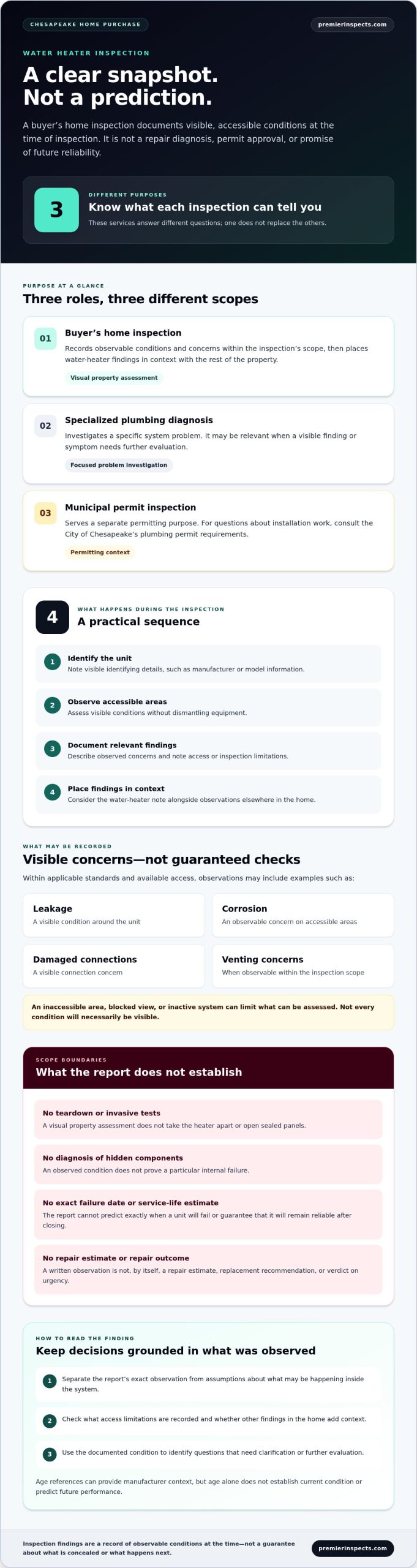
A water heater inspection Chesapeake buyers receive as part of a buyer’s home inspection assesses the unit’s visible, accessible conditions within the inspection’s stated scope. A home inspection documents what can be observed. A specialized plumbing diagnosis investigates a specific system problem. The distinction matters: buyers need useful information about the property, but a visual inspection is not a teardown or repair estimate.
The water heater supplies hot water, and its visible condition or apparent operation can raise practical questions before closing. Is there staining beneath the unit? Does a connection appear damaged? Does the report identify an issue that warrants follow-up? These observations help you understand the property and decide what to ask next. They do not prove a particular internal failure.
Water heaters vary in type and configuration, so components and operating principles differ. Water heating principles and types offers background on common systems. The inspection focuses on observable conditions in the home, not a comprehensive technical evaluation of every component.
Which visible water heater conditions may an inspector report?
Within applicable inspection standards and available access, an inspector may describe the unit’s observable condition, installation context, and apparent operation. Visible concerns might include leakage, corrosion, damaged connections, or venting concerns. These are examples, not guaranteed checks, and not every condition will necessarily be visible. A blocked area, inaccessible component, or inactive system can limit what can be assessed.
The report records observations, not a diagnosis of hidden components or a precise estimate of remaining service life. If a finding raises questions, use its description to identify what needs clarification or further evaluation.
What does a home inspection not establish?
A home inspection is generally based on visual observation within its defined scope. It does not involve taking the water heater apart, opening sealed panels, or performing invasive tests. Those steps fall outside a visual property assessment and may be relevant to a separate plumbing diagnosis when a specific concern needs investigation.
Even if a unit appears to operate during an inspection, that does not guarantee it will remain reliable after closing. Concealed conditions may not be observable, and a report cannot promise a repair outcome. Treat the findings as a record of what was seen at the time. Use them to shape focused questions about the unit’s history, observed symptoms, or possible next steps, without assuming they reveal what is inside the system.
How a Water Heater Inspection Works During a Chesapeake Home Purchase
A buyer’s inspection follows a practical sequence: identify the water heater, observe accessible areas, document relevant findings, and explain how those observations fit into the property report. The goal is a clear snapshot to support your purchase decision, not a teardown or service call. Access, visible conditions, and applicable inspection standards shape what can be evaluated on inspection day.
What happens when the water heater is accessible?
The inspector first locates the unit and notes visible identifying details, such as manufacturer or model information. If you are reviewing an older unit, manufacturer-specific age references, including a Bradford White water heater age guide, may provide context. Treat an age estimate as background, not a condition assessment. The report’s observations and the unit’s visible state are separate pieces of information.
The inspector then observes accessible areas without dismantling equipment. If a concern is visible, the report can describe it and explain relevant access or inspection limitations. For example, an item blocked from view may limit what can be reported about that area. The report should distinguish an observed condition from something that could not be evaluated.
Finally, the findings are placed in context with the rest of the home. A water-heater note is more useful when considered alongside related observations elsewhere in the property, rather than treated as a complete diagnosis on its own. For Chesapeake-specific permit questions about installation work, consult the City of Chesapeake’s plumbing permit requirements. Municipal permitting and a buyer’s property inspection serve different purposes.
How should buyers use water-heater findings?
Read the report carefully and separate what it documents from what you may be assuming. A written observation is not, by itself, a repair estimate, replacement recommendation, or verdict on urgency. Use the exact wording to identify any questions that need clarification. An A. O. Smith water heater age reference may offer manufacturer context, but age alone does not establish current condition or predict future performance.
Review the finding alongside the broader inspection results. Consider what the report actually observed, what access limitations it records, and whether another finding in the home adds useful context. If you are weighing the issue as part of your purchase, discuss the report with your real estate representative as appropriate. This keeps decisions grounded in documented information rather than guesses about what the heater might need.
A detailed buyer’s home inspection report can help you organize questions and understand the water heater within the wider property. If you are preparing to purchase in Chesapeake, you can schedule a buyer’s home inspection for property information in a clear, report-based format.
Home Inspection, Plumbing Diagnosis, or Chesapeake Permit Inspection?
These inspections may all involve a water heater, but they answer different questions. A buyer’s home inspection considers observable conditions as part of a broader property assessment. A plumbing diagnosis focuses on a specific concern. A municipal permit inspection relates to work covered by a permit. A permit sign-off, a repair visit, and a buyer’s inspection are not interchangeable approvals of the heater’s overall condition.
| Inspection type | Main purpose | What it means for a buyer |
|---|---|---|
| Buyer’s home inspection | Document observable conditions within the property inspection scope. | Helps you understand visible water-heater findings alongside the home’s other reported conditions. |
| Plumbing diagnosis | Investigate a specific plumbing or water-heater concern. | May help clarify a reported symptom or concern, but it is distinct from a property-wide inspection. |
| Municipal permit inspection | Evaluate specified work associated with a permit. | Relates to permitted work, not a certification of the heater’s present overall condition. |
A buyer’s home inspection documents observable property conditions; a plumbing diagnosis investigates a particular system concern, while a municipal permit inspection addresses specified permitted work. That distinction is central to understanding a water heater inspection Chesapeake buyers arrange during a purchase. It provides property information, not plumbing troubleshooting or municipal approval.
When does Chesapeake’s water-heater permit guidance apply?
Chesapeake’s permit guidance concerns installation work, including new gas and electric water heaters. Requirements can depend on the work being done, so buyers reviewing records for an installation should consult the City’s current plumbing permit guidance for applicable requirements. A home inspection does not determine whether a past project received municipal approval, and its findings are not a code inspection or permit sign-off.
When might a plumbing diagnosis be a separate next step?
A separate diagnosis may be relevant if the buyer’s report documents a specific concern that needs investigation. A visible condition or reported symptom may prompt questions the broader inspection was not designed to answer. The report helps identify the concern, but it does not establish its cause or dictate a repair.
Keep the next step focused. Note the report’s exact observation, any access limitation, and what remains unanswered. Then discuss the finding with your real estate representative as appropriate and consider whether a targeted plumbing evaluation would help inform your decision. A finding does not automatically mean the heater needs repair or replacement. It provides a grounded starting point for follow-up, while permitting records and municipal inspections remain separate matters tied to the work performed.
How Chesapeake Buyers Can Prepare for Water Heater Inspection Findings
Good preparation makes the inspection more useful, but it does not mean servicing or adjusting the equipment yourself. Before a water heater inspection, Chesapeake buyers can take a few simple steps to help the inspector access the area and understand any known history. Focus on useful information and safe access, not on making the unit look or operate differently.
- Keep the route to the water heater clear without moving the unit or attached equipment.
- Gather any available installation, service, or replacement records.
- Write down known symptoms, such as a history of leaks or inconsistent hot water, and when they were noticed.
- Prepare questions about the report, access limitations, and what a finding does or does not establish.
Do not open sealed panels, handle connections, or attempt repairs to prepare for an inspection. If the unit or surrounding area is blocked, leave it as it is and let the report reflect any access limitation. For broader preparation, A Premier Home Inspection’s home inspection preparation guidance can help you plan for the property visit.
What information can help put the water heater in context?
Available records can add useful background. An installation document or service record may help establish what work was previously reported, but it does not prove the unit’s present condition. Keep records together and distinguish details from paperwork from your own observations or the seller’s information.
A visible manufacturer label may help identify the unit. If you cannot see it without moving equipment or opening a panel, do not try to access it. Identification details provide context, but they do not determine whether the heater is functioning as intended or how long it may continue to operate.
How can buyers review findings without jumping to conclusions?
Start with the report’s exact wording. Separate three things: what the inspector observed, what the report says could not be evaluated, and what you still want answered. A visible concern is not automatically a confirmed defect, repair recommendation, or cost estimate. Likewise, a limitation means the report could not address that area fully. It does not establish what might be behind it.
If a finding leaves a specific question unanswered, use it to decide whether a qualified specialist’s evaluation would help. A documented concern may justify asking for further assessment, while a general note may simply prompt a question about records or history. Keep your follow-up focused on the evidence and the decision you need to make. Review the report with your real estate representative as appropriate, and do not treat an assumption as a confirmed condition.
Book a Chesapeake Buyer’s Home Inspection for Clearer Water Heater Findings
A water heater does not exist in isolation. A buyer’s home inspection considers observable conditions across the property, helping you understand the unit as one part of the home rather than treating one observation as the whole story. That broader view can make findings easier to interpret and help you organize questions before closing.
Why does the whole-home context matter to buyers?
Water-heater observations sit within a larger record of visible property conditions. A detailed report gives you a place to review what was observed, note any stated limitations, and consider which questions deserve follow-up. It does not diagnose hidden problems or promise future performance. Instead, it supports informed decisions by describing findings in the context of the inspection.
A Premier Home Inspection serves Chesapeake and the wider Hampton Roads area, including Norfolk, Virginia Beach, Portsmouth, Suffolk, and Hampton. Its buyer’s home inspections provide property information through detailed reports, helping buyers understand water-heater observations alongside the rest of the property findings. A property-wide assessment provides a record of observable conditions, not a repair quote or municipal approval.
A Premier Home Inspection is veteran-owned and operated by Clay Somers, a Certified Master Inspector. Its detailed reports give Chesapeake buyers a practical foundation for reviewing the home and deciding what questions to raise next. A water heater inspection Chesapeake buyers arrange as part of a buyer’s home inspection is most useful when its findings are considered alongside the property-wide report, not in isolation.
A Premier Home Inspection also offers free RecallCHEK service. It is a separate resource, not a guarantee about a water heater’s condition, safety, or future performance. Keep that distinction clear as you review the inspection findings and any available information about the unit.
For broader local context on what a property inspection can cover, use a Chesapeake and Hampton Roads home-inspection guide alongside your report. The report itself is the key reference for the specific conditions observed at the property, including any noted limits on access or evaluation.
What is the next step before closing?
Arrange the buyer’s home inspection early enough in your purchase timeline to receive and review the report before key decisions are due. A clear record is most useful when you have time to understand the findings, discuss questions with your real estate representative as appropriate, and decide whether an observation calls for additional evaluation. No inspection can remove every uncertainty, but a thorough property-wide report helps replace guesswork with documented information.
Ready to assess the home with a clear, buyer-focused report? Book a buyer’s home inspection.
Make Your Inspection Findings Work for Your Purchase
Turn the inspection report into a short, practical decision plan. Mark any water-heater observations you want clarified, note what the report says could not be evaluated, and keep questions about records or follow-up together. Then review those points in the context of your purchase timeline and discuss them with your real estate representative as appropriate.
A water heater inspection Chesapeake buyers arrange as part of a buyer’s home inspection is most valuable when it informs a decision, not when it is mistaken for a promise about future performance. Use the documented findings to decide whether you need more information before moving forward. That keeps your next steps grounded in what was observed and helps you approach closing with greater clarity.
Make your next decision with clear information and confidence.
Frequently Asked Questions About Water Heater Inspections
What does a water heater inspection include in Chesapeake?
A water heater inspection Chesapeake buyers receive as part of a buyer’s home inspection typically documents visible, accessible conditions and any access limits. The report may note an observable leak, corrosion, or damaged connection if present and within scope. It does not involve disassembling the unit or invasive testing, and it is not a plumbing diagnosis. For example, staining near the base is an observation, not proof of where moisture began or what repair is needed.
Is a water heater inspection the same as a plumbing inspection?
No. A buyer’s home inspection considers the heater as one part of the home and records conditions visible within its scope. A plumbing diagnostic visit generally focuses on investigating a specific symptom, such as recurring loss of hot water or an active leak. If the purchase inspection notes a concern but cannot identify its cause, that finding can help you decide whether focused troubleshooting would add useful detail.
Does Chesapeake require a permit to install a new water heater?
Yes. The City of Chesapeake requires a permit to install a new gas or electric water heater, and the permit type depends on the work. The city also identifies a mechanical permit for replacing a gas heater with the same type. Requirements can change and project details matter, so consult current city guidance for the specific work. A homebuyer’s inspection does not replace a required permit or municipal review.
Can a home inspection tell me how much life a water heater has left?
No. An inspector can record visible conditions and identifying information, but cannot reliably calculate how long the unit will continue working. A manufacturer label or available service record may add age or history context, yet neither proves its present condition. A newer-looking heater can still have a visible concern, while an older unit may show no obvious issue during inspection. Use the report to frame questions, not as a countdown to failure.
What happens if an inspector finds a water heater leak?
If a leak is visible and within the inspection scope, the report can describe its location and appearance, along with any access limits. That observation does not establish the source, severity, or repair required. Keep the report’s wording for reference. If water is actively escaping, notify the appropriate property representative promptly rather than attempting an inspection-day repair. A plumbing specialist may investigate the specific concern if further diagnosis is needed.
Should I get a separate water heater inspection when buying a home?
Not automatically. A buyer’s home inspection may provide enough information when there is no specific concern requiring further investigation. If the report notes a leak, a reported operating issue, or an area that could not be accessed, a separate evaluation may help answer a narrower question. Buyers in Chesapeake, Norfolk, Virginia Beach, Portsmouth, Suffolk, and Hampton can use the written finding to decide whether that added information matters to their purchase.
Can a permit inspection confirm that an existing water heater is in good condition?
No. A municipal permit inspection relates to specified permitted work and its applicable approval process. It is not an ongoing assessment of an existing heater’s overall condition. A past sign-off may document a review of an installation or other permitted project at that time, but it does not establish how the unit appears or operates today. For current property information, review the buyer’s inspection report and consider follow-up if it identifies a focused concern.