

What if a costly issue in a Hampton home is hidden underground? If you’re asking “what is a sewer scope inspection Hampton buyers should consider?”, it’s a camera-based visual assessment of accessible sections of the property’s sewer line. A standard home inspection generally can’t evaluate the inside of buried piping just by viewing the home, so a sewer scope can add useful information before closing.
A sewer camera may show visible concerns such as root intrusion, damage, an obstruction, or standing water. It does not guarantee against future problems or provide a complete diagnosis of every hidden condition. The camera can assess only the sections it reaches and can see, so access and visibility matter when interpreting the results. If an observation leaves important questions unanswered, further evaluation may help clarify its significance.
This guide explains what a sewer scope examines, how it differs from a standard home inspection, and how to use its findings while keeping the limits in mind. A Premier Home Inspection provides sewer scope assessments in Hampton and across Hampton Roads, including Chesapeake, Norfolk, Virginia Beach, Portsmouth, and Suffolk. Veteran-owned and led by Clay Somers, a Certified Master Inspector, the company provides detailed reports to help buyers make informed property decisions.
Key Takeaways
- Learn what is a sewer scope inspection Hampton buyers can use to assess accessible portions of a concealed sewer line.
- Understand how a camera assessment complements a standard home inspection, and how access affects what the inspector can see.
- Recognize observations such as cracks, offsets, root intrusion, or standing water, and why their significance depends on context.
- Consider when a sewer scope may add useful information during due diligence, including when a property has recurring drainage symptoms.
- See how a focused assessment from A Premier Home Inspection can support a more informed Hampton property decision.
What Is a Sewer Scope Inspection in Hampton, and What Does It Check?
If you’re searching “what is a sewer scope inspection Hampton,” the short answer is a camera-based visual assessment of accessible sections of a property’s sewer line. The inspector guides a camera into the pipe to view its interior without excavating the buried line. This can reveal visible conditions along the camera’s route, but it only provides information about areas the camera can reach and see.
A sewer scope complements a general home inspection; it doesn’t duplicate it. A routine home inspection evaluates visible components and systems, while buried sewer piping can have conditions that aren’t apparent from inside the home. A scope adds a focused look at that otherwise hidden part of the property. It’s also different from drain cleaning: an inspection observes visible pipe conditions, while cleaning is intended to clear buildup or obstructions.
The term Pipeline video inspection describes the broader camera-based method used to view pipe interiors. For a homebuyer, the practical value is visual information about accessible portions of the sewer line to consider alongside the rest of the property inspection.
Which parts of the sewer line can a camera scope assess?
The inspector introduces the camera through an accessible entry point and follows the line as far as conditions allow, potentially toward the main connection. The camera shows visible interior surfaces; it doesn’t expose the pipe by digging. Access points, bends, obstructions, and other line conditions can limit how far the camera travels or what it can show. A scope can’t confirm the condition of sections outside the camera’s view.
Why can a Hampton home need a separate sewer scope?
A house may appear well maintained while its buried sewer piping remains out of sight. That doesn’t mean there’s a defect. It means a standard visual inspection may not reveal the line’s interior condition. A separate scope can give buyers another piece of information before making a property decision, especially if they want to understand more than a surface-level assessment can show. For broader homebuying inspection context, explore our homebuyer inspection guide.
A Premier Home Inspection provides sewer scope assessments in Hampton and across Hampton Roads. The inspector’s observations are considered in light of what the camera could access and show, helping buyers understand both the visible conditions and the limits of the assessment.
How a Hampton Sewer Scope Inspection Works, from Access to Findings
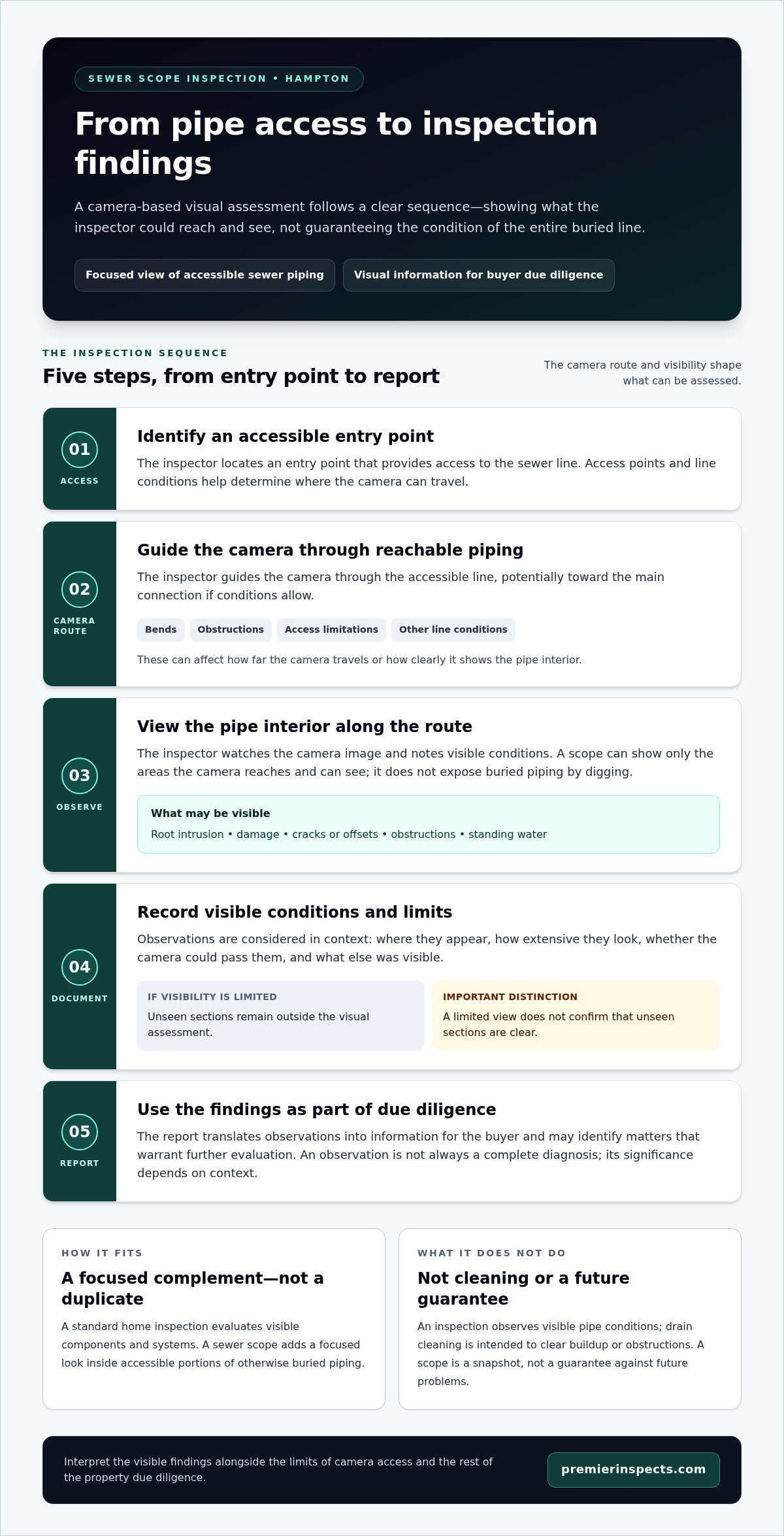
A sewer scope follows a practical sequence: identify an accessible entry point, guide the camera through the piping, observe the interior, document visible conditions, and report the findings. The purpose is to show what could be observed during the inspection, not to predict how the line will perform in the future.
What happens during the camera inspection?
The inspector first identifies an entry point that provides access to the sewer line. From there, the camera is guided through the accessible piping while the inspector watches the image and notes relevant conditions. The route may continue toward the main connection if the camera can pass through the line. Access, bends, blockages, and other conditions can affect how far it travels and how clearly the pipe interior can be seen.
Keep the camera’s limits in mind as you review the inspection. It can show only the areas it reaches and can view; it doesn’t reveal the entire buried system automatically. If visibility is limited or the camera can’t continue, the unseen sections remain outside the assessment. A limited view is not confirmation that those sections are clear.
What does the sewer scope report tell a buyer?
The report translates visible observations into information you can use during due diligence. It can document conditions seen along the camera’s route and identify observations that may warrant further evaluation. An observation is not always a complete diagnosis. Its significance can depend on where it appears, how extensive it looks, whether the camera could pass it, and what else was visible.
A sewer scope is also a snapshot, not a guarantee that the pipe will remain problem-free. Conditions may change after the inspection, and areas the camera couldn’t access remain outside its visual assessment. A Premier Home Inspection, led by Certified Master Inspector Clay Somers, emphasizes thorough inspections and detailed reporting so buyers can better understand findings and their limits.
Consider the findings alongside the rest of your purchase due diligence. For a broader overview, see our buyer home inspection information. If you’re evaluating a Hampton property, you can also schedule a sewer scope inspection as a focused part of the process.
What Sewer Scope Findings Matter to Hampton Homebuyers?
A sewer camera can show conditions that deserve attention, but an image alone doesn’t tell the whole story. For buyers searching “what is a sewer scope inspection Hampton,” it helps to distinguish what the inspector observed from what that observation may mean for the property.
Visible findings are interpreted in context, including their location, apparent extent, and effect on the camera’s view or passage. A single irregularity isn’t automatically evidence that a line has failed. Nor does an inspection result by itself prescribe a repair. The findings provide information to consider; the appropriate next step depends on the specific observation and the questions it raises.
Can a sewer scope find roots, cracks, or blockages?
A scope may reveal visible root intrusion, an obstruction, a crack, an offset where pipe sections don’t align, or standing water. These are observations, not automatic verdicts. For example, an image may show an obstruction without establishing its cause or how far it extends beyond the camera’s view. An apparent crack or offset also needs to be considered in context rather than assumed to require a particular repair.
Use the documented finding to guide questions about the property instead of jumping to conclusions. Note where an issue appears and whether the camera could continue past it. If the available view doesn’t answer an important question, further evaluation may help clarify the observation in relation to the purchase decision.
What can a sewer camera inspection not confirm?
A camera can’t visually assess sections it doesn’t reach or see. If access is limited, the line is obstructed, or the camera can’t pass through a section, those areas remain outside the inspection’s view. This matters when interpreting both a concerning image and an apparently clear view: neither should be treated as a complete assessment of unseen piping.
A scope is a visual assessment at the time of inspection, not a guarantee of future pipe performance. It can’t establish that the line will remain in the same condition or rule out issues in unseen areas. Further evaluation isn’t automatic; it may make sense when a specific observation, limited visibility, or other relevant information leaves an important question unanswered. This distinction helps buyers use the results without treating every irregularity as an emergency or an all-clear.
When Should You Get a Sewer Scope Inspection for a Hampton Property?
A sewer scope may be worth considering when you’re buying a home and want more information about concealed sewer piping. It isn’t automatically necessary for every Hampton purchase. Consider the property, any information you have about the line, and whether seeing accessible pipe interiors would help you assess the home before closing.
Recurring slow drains, backups, or unusual gurgling can be useful context to share with the inspector. These symptoms don’t prove there’s a sewer-line defect; different conditions can produce similar signs. Symptoms alone can’t show the pipe’s interior, while a camera may provide a visual view of accessible sections. That view has limits too, because access and line conditions determine what the camera can reach and reveal.
Is a sewer scope worth considering during a home purchase?
Ask whether the information from a scope would help you make a more informed decision about a concealed line. Consider it if the piping can’t be reviewed through a routine visual inspection, you have recurring drainage concerns, or you want another source of information during due diligence. The inspection can offer useful observations, but it can’t guarantee a complete view or predict future performance. For wider purchase-inspection context, read our buyer home inspection guide.
A quick decision checklist:
- Visibility: Is the sewer line concealed from a routine visual inspection?
- Symptoms: Have you noticed recurring drainage issues worth mentioning?
- Decision value: Could more information about visible pipe conditions affect how you evaluate the property?
- Limits: Are you prepared to consider any sections the camera couldn’t assess?
What should buyers do if the camera reveals a concern?
Start with the documented observation. Note where it appears, what was visible, and whether the camera could continue through the line. Don’t assume an image alone establishes the cause, full extent, or necessary response. Depending on the finding and the questions that remain, further assessment may help clarify its significance. The scope informs your decision; it doesn’t prescribe repairs or determine what a buyer should negotiate.
If a sewer scope would add useful information to your Hampton home purchase, book a sewer scope inspection.
Book a Sewer Scope Inspection in Hampton with A Premier Home Inspection
A sewer scope is a focused part of property due diligence: it gives buyers a visual assessment of accessible portions of an otherwise concealed sewer line. The observations can help you understand what was visible during the inspection and consider it alongside the rest of your evaluation. They don’t guarantee future pipe performance or establish the condition of areas the camera couldn’t reach.
A Premier Home Inspection provides sewer scope assessments across Hampton Roads, including Hampton, Chesapeake, Norfolk, Virginia Beach, Portsmouth, and Suffolk. The veteran-owned and operated business is led by Clay Somers, a Certified Master Inspector. For buyers researching “what is a sewer scope inspection Hampton,” the service offers a practical way to learn more about accessible sections of the line before making a property decision.
What to expect from a professional sewer scope assessment
The inspection focuses on observing accessible piping and communicating what the camera shows. Findings need to be understood within the limits of access, camera passage, and visibility. A careful assessment distinguishes visible observations from conclusions that may require additional evaluation. For broader home inspection preparation, review our home inspection preparation guide.
Useful details to have on hand include recurring drainage symptoms you’ve noticed and any information you already have about the property’s sewer line. Sharing that context helps frame the inspection, but symptoms alone don’t establish a defect. The camera’s view remains the basis for what can be observed.
How to take the next step in Hampton
For Hampton-area buyers, scheduling a sewer scope adds a focused visual assessment to the property evaluation. The results can clarify what was observed and what could not be assessed. That information gives you a more practical basis for deciding whether questions about the property remain.
When you’re ready to include a sewer scope in your Hampton home purchase due diligence, schedule a sewer scope inspection.
Take the Next Step Toward a More Informed Hampton Purchase
A sewer scope adds a focused view of accessible sewer piping that a routine home inspection may not provide. For buyers asking “what is a sewer scope inspection Hampton,” the key point is that it offers visual information, not a guarantee about unseen sections or future pipe performance. Findings such as an obstruction or visible damage need to be understood in context, and further evaluation depends on what the inspection reveals.
Including this assessment in your property due diligence can give you useful information about a concealed part of the home. A Premier Home Inspection provides sewer scope assessments across Hampton Roads, including Hampton. The veteran-owned and operated company is led by Clay Somers, a Certified Master Inspector, and provides detailed reports to help buyers make informed decisions.
For a focused look at accessible sewer piping during your Hampton home search, book a sewer scope inspection with A Premier Home Inspection.
With a clearer understanding of visible conditions and inspection limits, you can weigh the findings alongside the rest of your purchase due diligence.
Frequently Asked Questions
What is a sewer scope inspection, and what does it look for?
A sewer scope inspection is a camera-based visual assessment of accessible sections of a property’s sewer line. The inspector uses the camera’s view to look for visible conditions such as blockages, root intrusion, cracks, misaligned joints, or standing water. If you’re asking “what is a sewer scope inspection Hampton” buyers can use during due diligence, it’s a focused way to learn more about concealed piping, subject to access and visibility.
Is a sewer scope inspection included in a standard home inspection?
A sewer scope is a separate, focused assessment, not the same as a general home inspection. A standard inspection evaluates visible areas and components, but the interior of buried piping may not be visible during that review. A camera scope can add observations about accessible portions of the line. It still has limits: the camera may not reach every section, so it can’t confirm conditions outside its view.
When should I get a sewer scope inspection in Hampton?
Consider a scope during buyer due diligence if you want information about concealed sewer piping or have recurring drainage symptoms to discuss. Slow drains or backups don’t prove a sewer defect, but they can provide useful context. A scope isn’t necessary for every purchase; its value depends on the property and your questions. A Premier Home Inspection serves Hampton and Hampton Roads communities including Chesapeake, Norfolk, Virginia Beach, Portsmouth, and Suffolk.
Can a sewer scope inspection find tree roots or a broken sewer line?
A sewer camera may show visible root intrusion, cracks, or other signs of pipe damage, as well as obstructions or displaced joints. What appears on screen is visual evidence, not always a complete diagnosis of the cause or extent. The camera can assess only sections it can access and pass through. If a suspected break or other concern appears, its significance depends on the location, visibility, and extent of the observed condition.
What happens if the sewer scope inspection finds a problem?
Review the documented observation before deciding what it means for the property. Consider where the concern appeared, how much of the line was visible, and whether the camera could continue past it. An inspection finding doesn’t automatically establish the cause or prescribe a repair. Depending on the observation and any remaining questions, further evaluation may help clarify its significance as you consider your purchase.
Does a sewer scope inspection guarantee the sewer line will not fail?
No. A sewer scope shows visible conditions in accessible sections of the line at the time of inspection; it can’t guarantee how the pipe will perform in the future. Conditions may change, and areas the camera couldn’t reach remain unseen. Use the findings as one source of information in your property decision, while keeping the inspection’s access and visibility limits in mind.
How should I prepare for a sewer scope inspection?
Before the inspection, note any recurring drainage symptoms you’ve noticed and gather information you already have about the property’s sewer line. Sharing those details gives the inspector useful context, but symptoms alone don’t prove a defect. Access and line conditions affect what the camera can show, so the assessment is based on what’s visible during the inspection, not assumptions about unseen sections.